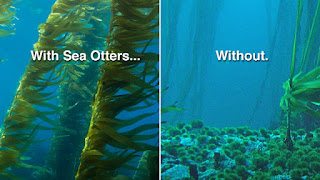
Keystone Species: What They Are and Why You Should Care By NECWA Intern Lydia Myers A keystone species is any organism that is irreplaceable in its ecosystem. These animals, plants, fungi, and other life forms significantly influence their surroundings and the number of other members of their food webs. A defining feature of keystone species is that though they have a large impact, they’re not incredibly abundant. Sea otters, African elephants, fig trees and hummingbirds are all examples of keystone species. A kelp forest with otters, and without https://seaotters.com/2013/05/why-are-sea-otters-important-no-sea-otters-no-kelp-forests/ Keystone species are often predators, not prey species. Their job is to keep other species in check and maintain balance in the ecosystem. Sea otters prey on sea urchins in kelp forests. Without this interaction, the kelp forests would be completely diminished by the sea urchins. African elephants, on the othe...


Comments
Post a Comment